
Beyond the Pole – Innovation and the Future of Metal Sign Posts
The humble sign post is undergoing a quiet revolution. While the classic U-channel post remains a staple, new materials, smart designs, and sustainability initiatives are reshaping what a sign post can be.

Flexible Posts: The "World's Toughest"
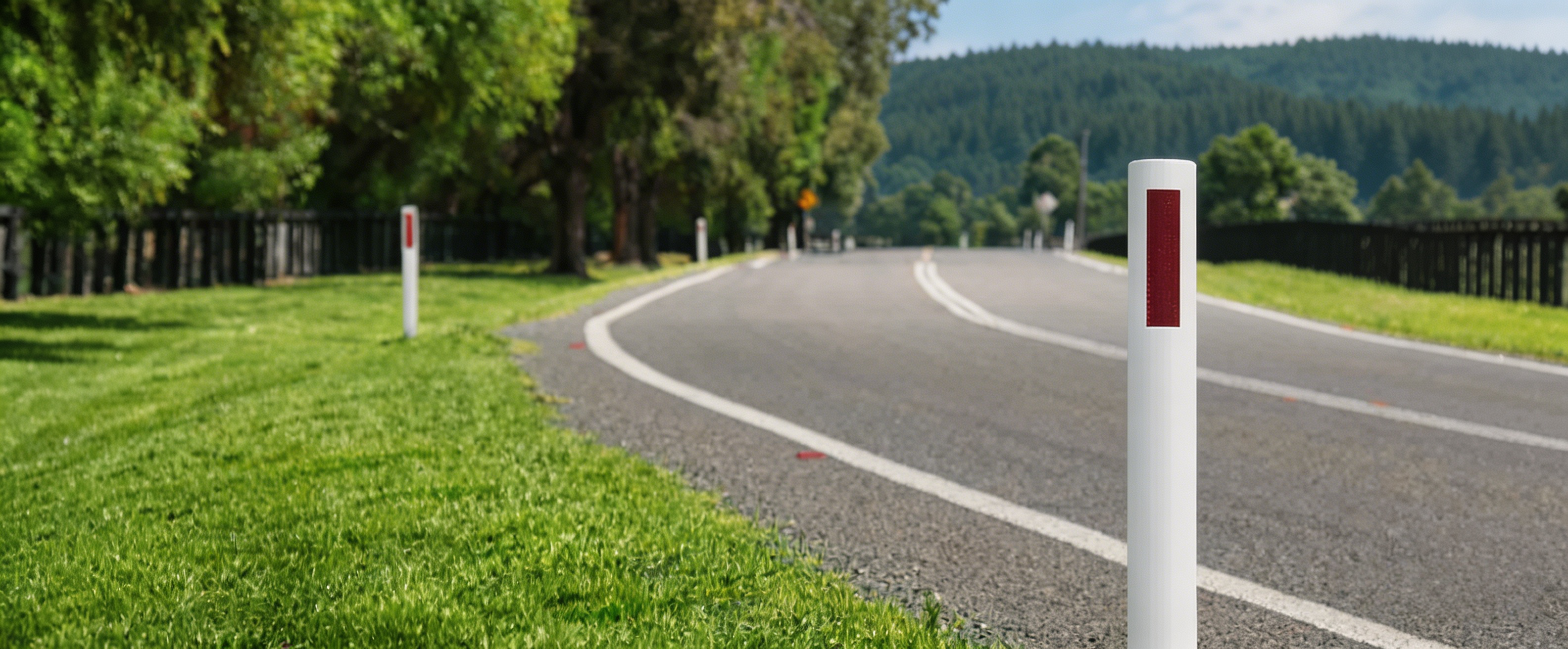
One of the most exciting innovations is the flexible steel post. Products from certain manufacturers are engineered to do something remarkable: recover to vertical after repeated impacts. Unlike traditional breakaway posts that sacrifice themselves in a crash, these flexible markers bend upon impact and then spring back. This makes them ideal for roundabouts, bike lanes, and asset markers where frequent minor collisions occur. They are often coated with advanced anti-corrosion treatments and come with a 10-year guarantee.
Sustainability: The Bamboo Alternative
The push for lower carbon footprints is reaching the sign industry. In a pioneering project in Hard, Austria, the municipality decided to gradually replace over 2,200 aluminum traffic signs with signs made from bamboo.
Bamboo was chosen because it grows quickly, absorbs CO₂, and is particularly climate-neutral. According to the managing director of the producing company, a bamboo sign saves over 20 kilograms of CO₂ emissions compared to an aluminum equivalent. While not a metal post, this innovation challenges the industry to consider renewable resources for applications where extreme durability is less critical.
Modular Systems and Smart Integration
Modern sign posts are increasingly modular. This means they come with interchangeable components—adjustable heights, swappable bases (ground spike vs. surface mount), and quick-connect hardware. This flexibility allows municipalities to reconfigure signage without replacing the entire post, reducing long-term costs.
We are also seeing the integration of smart technology. Posts can now be designed to accommodate solar-powered lighting, digital displays, or even sensors that monitor traffic flow or structural integrity. These "smart poles" serve dual functions, combining traditional signage with data collection and connectivity.
Passive Safety Standards
As safety standards evolve, so do posts. In the UK and Europe, for example, posts on roads with speed limits over 40 mph must be "passively safe" according to BS EN 12767. This standard classifies support structures based on how they behave during a collision, ensuring a predictable and safe outcome.
The future of the metal sign post is dynamic. It will be stronger yet more flexible, durable yet more sustainable, and increasingly intelligent. The simple pole that holds up a sign is becoming an integral part of our connected, safer, and greener infrastructure.
Communication With Customers From the Heart, We Can Do Better! e-mail: jinshi@wiremeshsupplier.com
Hebei jinshi industrial metal co., ltd