
When Infrastructure Gets a Voice – The Journey to Sign Post V2I Communication
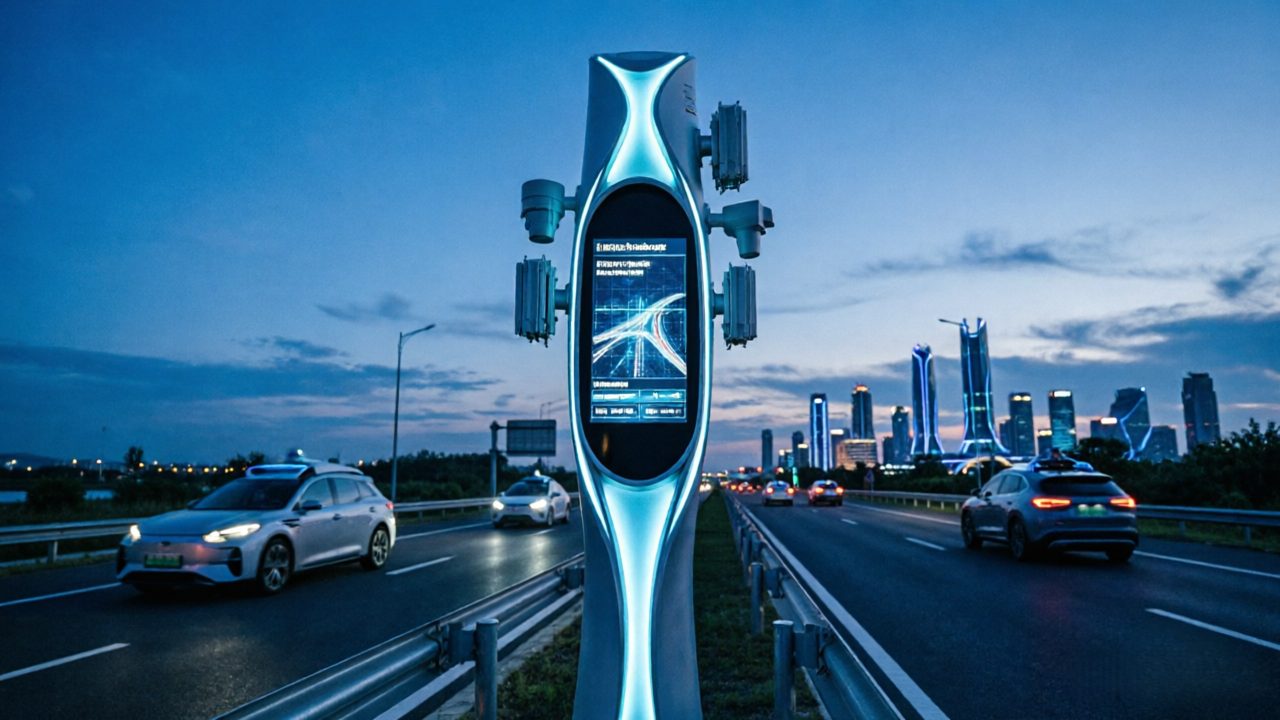
The metal sign post is gaining a digital twin. Vehicle-to-Infrastructure (V2I) technology is transforming passive roadside markers into active nodes in a wireless network, broadcasting precise data that enhance safety and mobility without changing the sign’s physical appearance.
At the core of this transformation are two primary V2X technologies: Dedicated Short-Range Communications (DSRC) and its mainstream cellular alternative, C-V2X. These protocols operate in the 5.9 GHz frequency band, which is allocated for intelligent transportation systems in most major economies worldwide. A V2I-equipped sign post contains a ruggedized roadside unit (RSU) that continuously transmits a SPaT (Signal Phase and Timing) message, and the same digital framework applies to physical signs: an intersection’s stop sign can be digitally annotated with its exact coordinates and regulatory meaning, with real-time status supported for dynamic sign installations. An approaching connected vehicle receives these messages up to 1,000 meters away under ideal line-of-sight conditions, far beyond the typical visual recognition range.
The engineering challenge lies in linking the physical asset to a digital data stream. The SAE J2735 standard defines the core Message Set Dictionary for V2X communication. For physical signage, industry implementations typically extend standard message formats to carry the MUTCD code of the sign mounted on the post—such as an R1-1 for STOP—along with its GIS coordinates. The onboard unit in a vehicle cross-references this with internal map data; if a discrepancy exists (e.g., a sign newly installed or missing), the vehicle can flag it for a cloud-based asset-management system.
Power and communication backhaul are critical. Solar panels integrated into the sign post, hybrid battery systems, and Power-over-Ethernet from adjacent traffic signal cabinets provide energy. The RSU antenna must be physically oriented to maximize gain along the roadway while withstanding wind-induced vibration. All electronics are sealed in NEMA-rated enclosures to survive temperature extremes and moisture.
Crucially, V2I does not replace visual signage—it augments it. The physical sign serves as a redundant, fail-safe channel. If the wireless link fails due to interference or cyberattack, drivers still see the painted aluminum sign. Thus, the sign post evolves into a hybrid element of both the physical and digital transportation infrastructure, speaking a binary language to the cars of tomorrow while still wearing the symbols that human eyes have trusted for a century.
Communication With Customers From the Heart, We Can Do Better! e-mail: jinshi@wiremeshsupplier.com
Hebei jinshi industrial metal co., ltd