
The Sign in the Tunnel – Unique Challenges of Subterranean Signage
Road tunnels are among the most hostile environments for a sign post. Darkness, confined space, high-speed airflow, and the extreme hazard of fire demand engineering solutions that rarely apply on open roads.
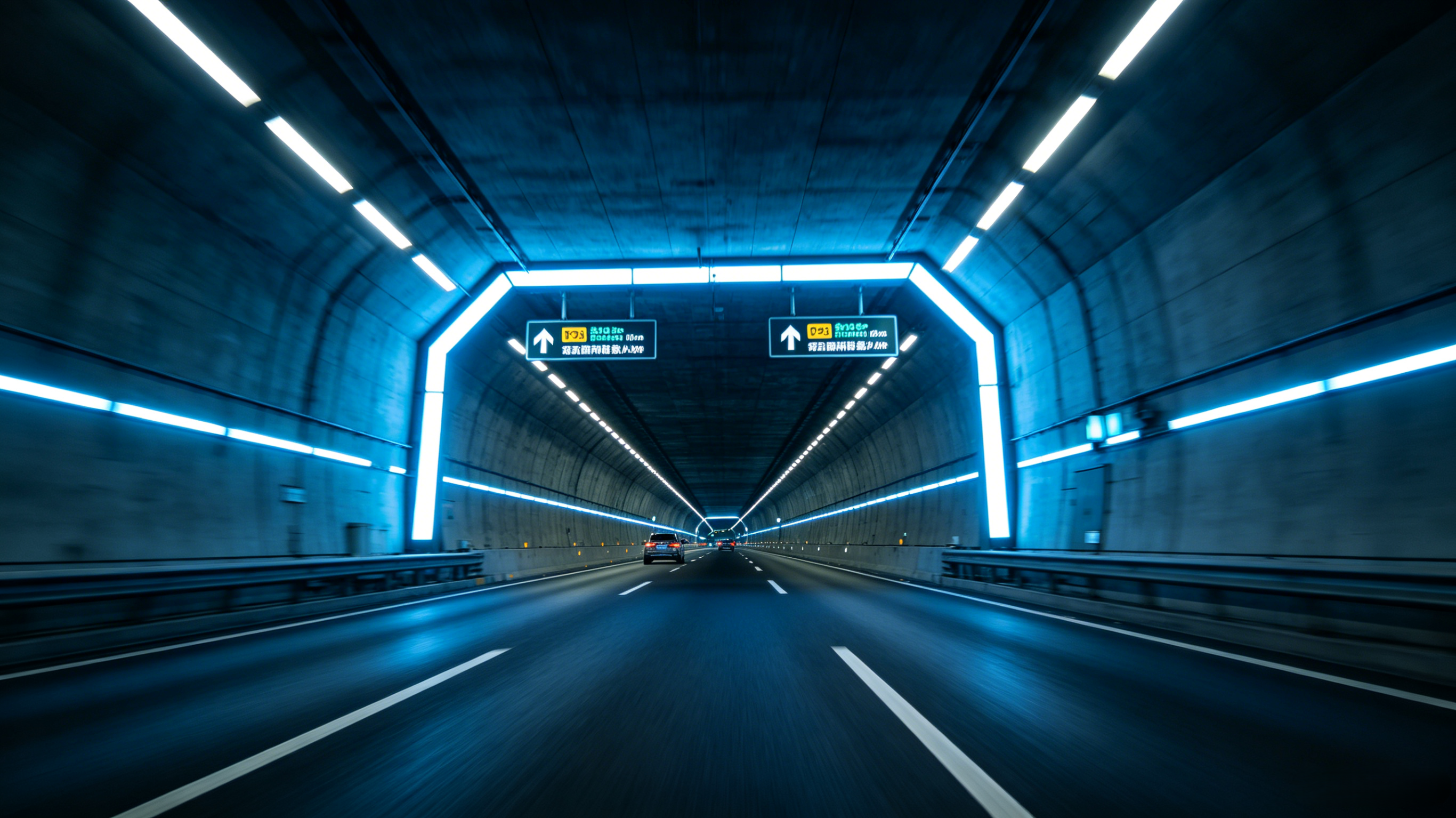
Ventilation-induced air currents present the first challenge. The piston effect of moving vehicles can create wind speeds exceeding 10 meters per second inside a tunnel. Suspended signs behave like bluff bodies, generating substantial drag and cyclic loading. Ordinary cantilevered posts can vibrate to fatigue failure. Therefore, tunnel signs are often fixed directly to the lining using multiple anchor points, distributing the load into the concrete or rock. Vibration dampers and stiffened backing frames are standard.
Fire safety introduces the most stringent material requirements. In a tunnel fire, peak temperatures can exceed 1,350°C under standard design fire curves. Standard aluminum sign blanks melt around 660°C, potentially dropping debris into the path of escaping occupants. In line with the fire safety principles reflected in standards like NFPA 502 for tunnel structural materials, tunnel signage and their mounting hardware are generally required to be non-combustible and highly melt-resistant. Consequently, sign blanks are typically made from steel, while rigidized basalt-fiber composite serves as a high-performance alternative for projects with stringent fire requirements. Coatings must resist delamination and emit minimal smoke and toxic fumes. For critical life-safety signage in high-grade long tunnels, some jurisdictions require all associated fixings, including bolts and brackets, to withstand two hours of fire exposure without losing load-bearing capacity.
Luminance contrast replaces simple retroreflection in many tunnels. Because headlamp illumination is steady and overhead lighting is present, signs are frequently internally illuminated with LEDs or edge-lit panels. The sign face must be matte to prevent specular glare from tunnel lights, which could blind drivers approaching the critical transition zone at the entrance portal where the eye adapts from bright daylight to relative darkness.
Positioning is another constraint. Tunnel profile gauges limit available space. A sign must never protrude into the dynamic envelope of vehicles, requiring computer-modeled clearance checks. The vertical curvature of the tunnel roof may force unconventional sign shapes or reduced heights. Every sign post or mount inside a tunnel is thus a piece of life-safety equipment, engineered for an environment where failure is not an option.
Communication With Customers From the Heart, We Can Do Better! e-mail: jinshi@wiremeshsupplier.com
Hebei jinshi industrial metal co., ltd