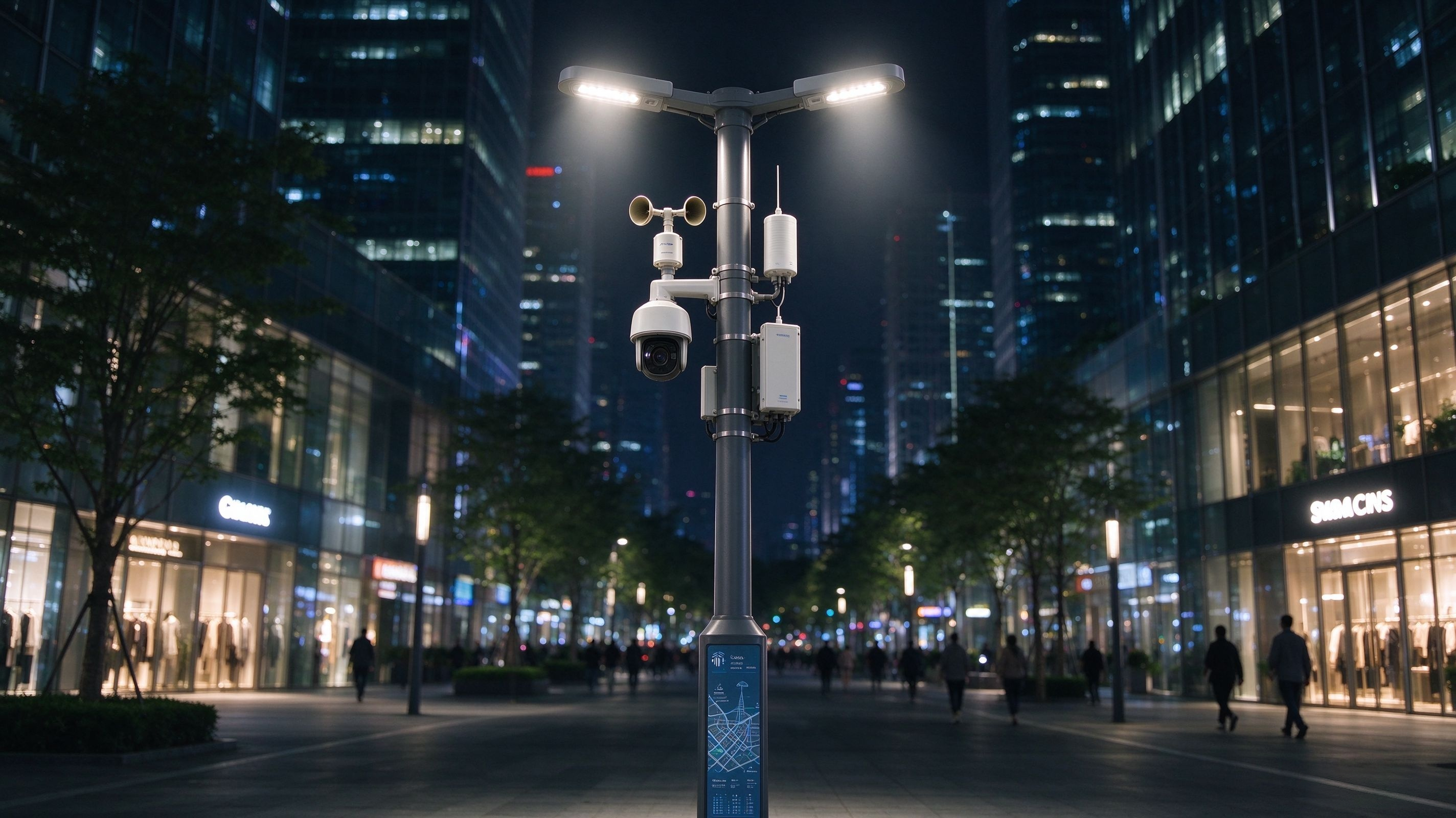
Beyond the Pole: How Sign Posts Are Becoming Smart City Infrastructure
For most of its history, the sign post has had one job: hold a piece of metal at a fixed height and orientation. That is beginning to change, as cities experiment with turning ordinary roadside poles, including sign and light posts, into multifunctional nodes of digital infrastructure, part of a broader trend often described as the smart pole.
The basic concept is straightforward: rather than installing separate poles for lighting, signage, cameras, and wireless equipment, cities and technology providers are integrating multiple functions into a single structural pole. A modern smart pole might combine LED lighting with environmental sensors monitoring air quality, noise, or temperature; small cellular network equipment supporting wireless coverage; and cameras used for traffic monitoring, alongside its original signage function.
Power and connectivity are the two practical challenges this trend has to solve, and here again, physics and engineering intersect with everyday roadside hardware. Many smart pole installations now integrate small solar panels, and sometimes micro wind turbines, directly into or near the pole structure, reducing dependence on trenching new electrical conduit to every location, a significant cost saving in dense urban retrofits. Data connectivity is typically provided through a mix of wired fiber connections where available and wireless technologies, including dedicated low-power protocols, allowing sensors to report data for months or years on limited battery reserves.
Traffic-specific applications are a particularly natural fit for this technology on sign posts themselves. Sensors integrated into or near a sign support can count and classify passing vehicles, detect pedestrians near crosswalks, or measure real-time traffic flow, feeding that data back to municipal traffic-management systems that adjust signal timing or issue congestion alerts, extending the original purpose of the roadside sign, communicating information to road users, into a two-way, data-driven system.
This technological layer does not eliminate the underlying structural requirements discussed throughout this series. A smart pole carrying solar panels, cameras, and communications equipment still has to be engineered against wind load, since added equipment increases both the wind-catching surface area and the weight the base and foundation must support. Breakaway safety requirements, where applicable, still apply to any support located within a roadway's clear zone, meaning the added electronics must be designed to survive, or safely detach during, the same controlled failure the post itself is engineered to undergo.
Market analysts tracking this sector project continued growth over the coming years, driven by municipal investment in connected infrastructure and falling costs for sensors and solar components. The result is a plausible future in which the humble sign post, the same object whose materials science, structural design, and safety engineering fill this series, quietly becomes one of the load-bearing nodes of the connected city, still doing its original job while doing a great deal more besides.