
Role in Visual Guidance: Why Post-Mounted Sign Posts Matter in Traffic Engineering
1. Introduction: The Cognitive and Visual Demands of Modern Driving
Modern motoring requires drivers to assimilate complex streams of visual information at high speeds. Traffic signs serve as the primary cognitive interface between highway authorities and vehicle operators, conveying regulatory mandates, warning alerts, and directional guidance. However, the efficacy of any traffic sign is entirely dependent upon the physical stability and precise spatial positioning of its supporting structure. This article examines the critical engineering role of post-mounted traffic sign posts within the overarching visual guidance architecture of road networks.
2. Human Factors and Sightline Engineering
From a cognitive psychology and human factors perspective, driver reaction time is directly influenced by legibility distance and sign conspicuity. A traffic sign must remain within the driver's cone of vision for a duration sufficient to permit target detection, reading comprehension, decision-making, and physical vehicle maneuver execution.
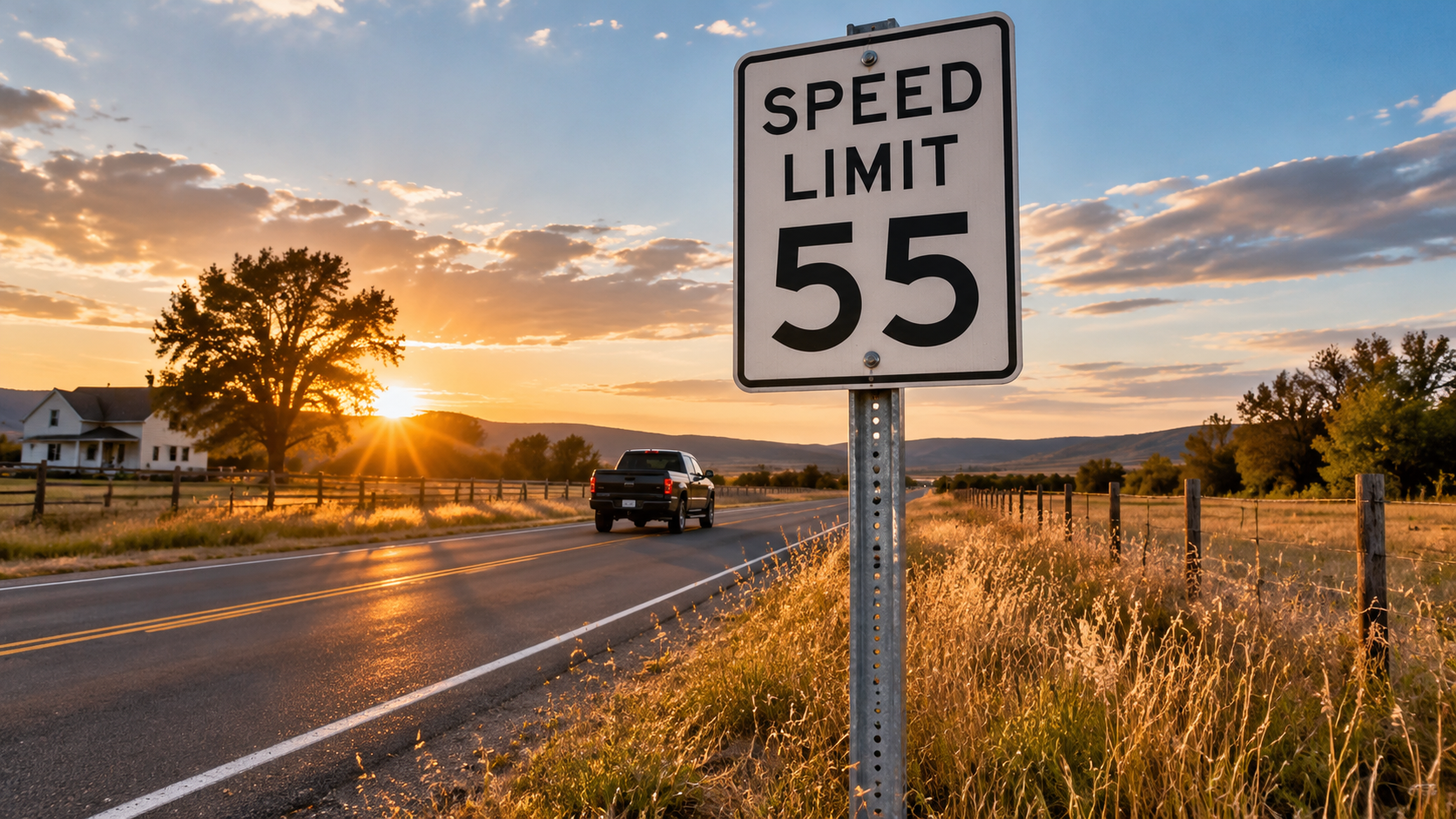
Post-mounted sign posts establish the precise elevation, lateral offset, and angular orientation required to optimize these sightlines. If a support post suffers from structural deflection, rotation, or settlement, the attached sign plate tilts or twists out of the optimal optical plane. Such misalignment introduces parallax errors, reduces retro-reflective efficiency at night, and severely impairs night-time or adverse-weather legibility.
3. Structural Stability as a Prerequisite for Visual Integrity
While sign plates are engineered with high-performance retro-reflective sheeting (such as ASTM Type XI micro-prismatic materials), their optical performance is meaningless if the support structure cannot maintain spatial equilibrium. Environmental forces—predominantly aerodynamic wind drag—exert continuous fluctuating lateral loads on the sign-post assembly.
The post must possess sufficient flexural rigidity to restrict lateral drift and torsional rotation within strict engineering tolerances. Excessive vibration or structural deflection not only blurs the visual target for fast-moving motorists but also induces high-cycle fatigue stresses at critical connection nodes, such as the base flange plate and anchor bolt interface.
4. Integration within the Roadside Safety Matrix
Beyond visual guidance, post-mounted sign supports function as critical components of roadside safety design. In contemporary highway engineering, supports located within the clear zone must adhere to passive safety criteria, such as breakaway or slip-base mechanisms, to minimize vehicular impact severity. However, standard rigid post-mounted systems positioned beyond the clear zone or behind protective barriers must maintain uncompromising structural resilience against extreme environmental loading.
5. Conclusion
Post-mounted traffic sign posts are far more than passive mounting brackets; they are vital engineering guardians of visual guidance. By maintaining precise spatial positioning, resisting environmental forces, and preserving optical legibility under rigorous operational conditions, these support systems constitute an indispensable pillar of modern traffic engineering.
Standards referenced
- BS EN — referenced in this guide; consult the issuing body for the current edition.
Compiled by the engineering team at Hebei Jinshi Industrial Metal Co., Ltd., a manufacturer of steel sign posts since 2008.
Communication With Customers From the Heart, We Can Do Better! e-mail: jinshi@wiremeshsupplier.com
Hebei jinshi industrial metal co., ltd