
Le profil en U : pourquoi une section transversale inhabituelle est devenue le cheval de trait de l'industrie du trafic
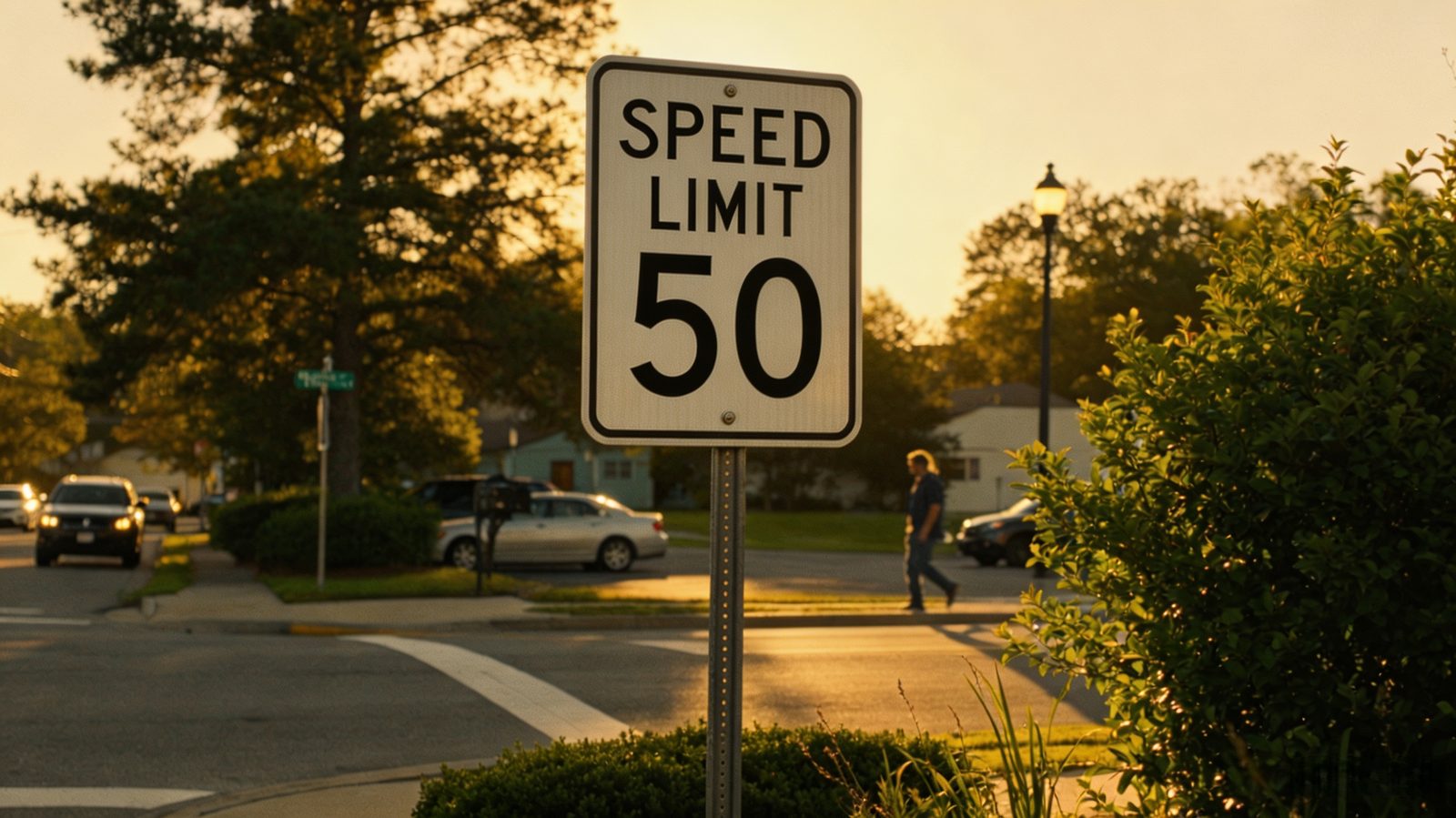
Look closely at almost any small road sign in North America, and the post beneath it is probably shaped like a sideways "C," or more precisely, a "U." This U-channel post, sometimes called a channel post, is the most common sign support on the continent, and its unusual cross-section is the result of deliberate structural engineering rather than accident.
A flat steel bar resists bending poorly, because all of its material sits close to its center, contributing little resistance to flexing forces. Engineers solve this by moving material away from the center: a beam performs far better in bending when its mass is distributed at a distance from the neutral axis, which is why I-beams, tubes, and channels dominate structural design generally. The U-channel achieves this efficiently, using a folded profile that adds rigidity in the direction the post is most likely to be pushed by wind or impact, while remaining light enough for one person to install without heavy machinery.
U-channel posts are manufactured by cold roll-forming, a process in which a flat steel strip is passed through a sequence of shaped rollers that progressively bend it into its final profile without heating the metal. Because cold working increases the yield strength of steel at the bends, the finished U-channel is measurably stronger at its folded edges than the flat strip it started as.
The design also solves a practical problem: mounting. The face of the channel offers a flat surface with pre-punched holes at regular intervals, typically every inch, so a sign can be bolted on at nearly any height without special tools. Some modern versions add a ribbed back panel, allowing a second sign to be mounted on the reverse side of the same post.
U-channel posts are produced in a range of weights, generally expressed in pounds per linear foot, from lightweight versions around one pound per foot for parking lots to heavier municipal grades of two to three pounds per foot for public roads carrying larger signs and more traffic. Heavier posts resist bending under wind load and routine impacts, while lighter posts cost less and remain easier to handle.
Comme un poteau profilé en U se plie, se tord ou se détache du sol lorsqu'il est heurté par un véhicule, les agences de transport le classent également comme un support intrinsèquement flexible, une propriété requise pour tout panneau situé dans la zone de dégagement d'une chaussée. Cette caractéristique de sécurité, traitée plus en détail plus loin dans cette série, est une conséquence directe de cette même section transversale ouverte qui rend le poteau facile à fabriquer et à installer.
Une communication avec nos clients venue du cœur : nous pouvons faire mieux ! E-mail : jinshi@wiremeshsupplier.com
Hebei jinshi industrial metal co., ltd