
Adjustable by Design: The Engineering of Telescoping Sign Posts
Not every sign post is a fixed length. In parking lots, temporary work zones, and properties where signage needs may change over time, telescoping sign posts offer a simple mechanical solution: a smaller post section that slides inside a larger one, letting the overall height be adjusted or extended without cutting new steel.
The basic design pairs two or more square or round tube sections of slightly different sizes, engineered so one fits snugly inside the next. A locking mechanism, commonly a spring-loaded pin, set screw, or clamp, holds the sections at a chosen extension length. This lets an installer raise a sign to meet a required mounting height on an irregular site, such as a sloped driveway entrance, without a custom-length post, or extend an existing post later if a taller secondary sign needs to be added.
From an engineering standpoint, telescoping designs introduce a trade-off that fixed-length posts avoid. Every sliding joint is a potential weak point, since the overlap between inner and outer sections must be long enough to transfer bending loads without excessive flex, and the locking hardware must resist both vertical slippage under the sign's weight and lateral movement under wind load. Manufacturers address this by specifying a minimum overlap length between telescoping sections, often expressed as a fraction of the smaller tube's diameter, and by using hardware, such as through-bolts or heavy-duty clamps, rated for the combined wind and impact forces expected at that joint.
Telescoping posts are especially common in applications outside traditional traffic engineering, such as real-estate signage, event and directional signs, or agricultural and private property markers, where the flexibility to change height on demand outweighs the marginal reduction in rigidity compared with a solid one-piece post. In these lower-speed, lower-traffic settings, the safety-critical breakaway requirements that govern posts on public roads generally do not apply in the same way, giving designers more latitude to prioritize adjustability.
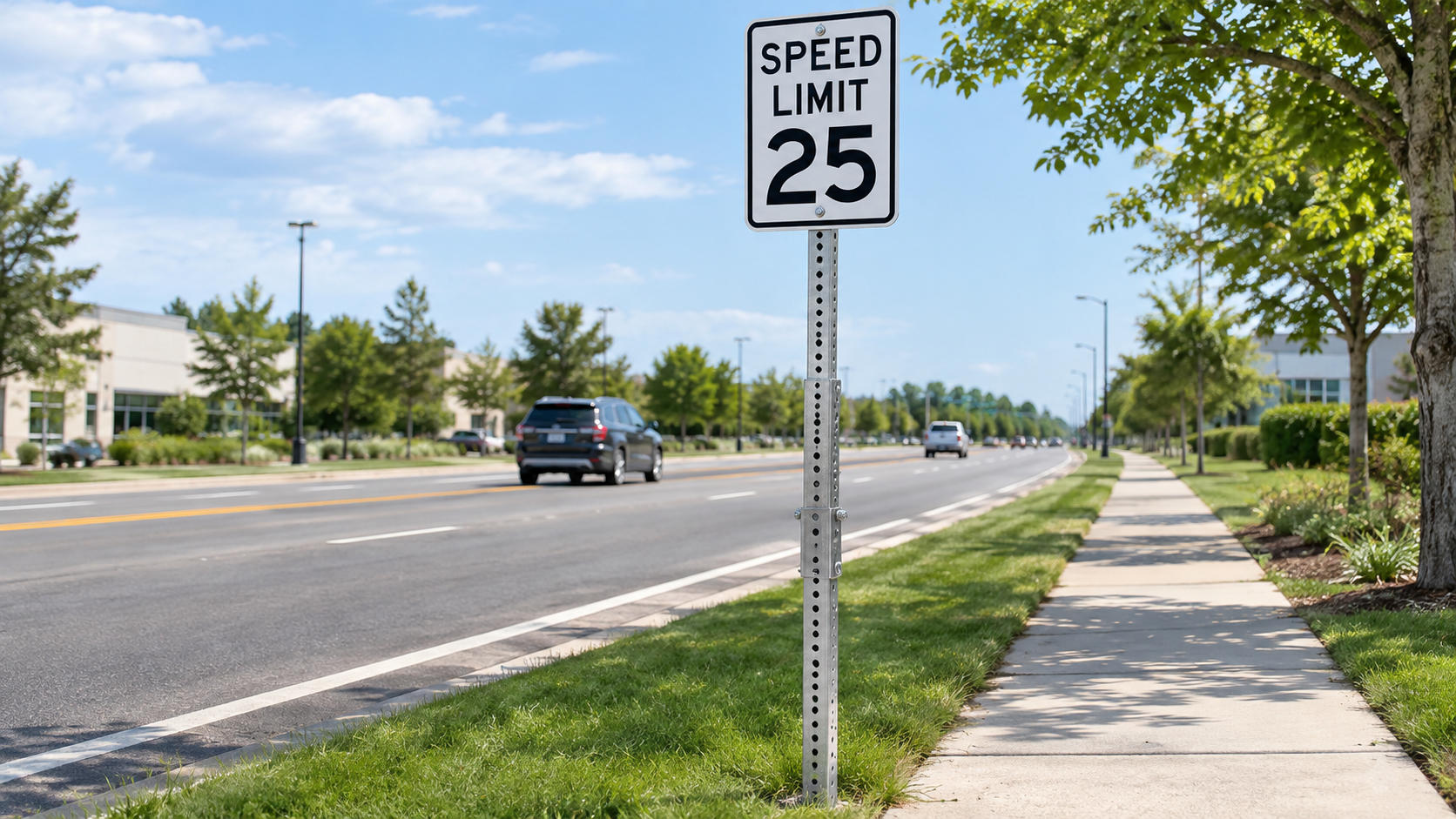
For public roadway applications, by contrast, telescoping designs are less common, precisely because that extra joint complicates the single, unbroken, crash-tested load path required for certified breakaway hardware. Where adjustable height genuinely is needed on a public road, agencies more often rely on the pre-punched hole pattern along a standard U-channel post, which allows a sign to be repositioned vertically without introducing a mechanical sliding joint at all.
Even in its simplest form, a telescoping post illustrates a recurring theme in sign engineering: every feature added for convenience, whether a sliding joint, a locking pin, or an extra length of overlap, has to be weighed against the structural and safety performance the post is expected to deliver.
Communication With Customers From the Heart, We Can Do Better! e-mail: jinshi@wiremeshsupplier.com
Hebei jinshi industrial metal co., ltd