
Témoin silencieux – ce que les ingénieurs forensiques apprennent des poteaux de signalisation brisés
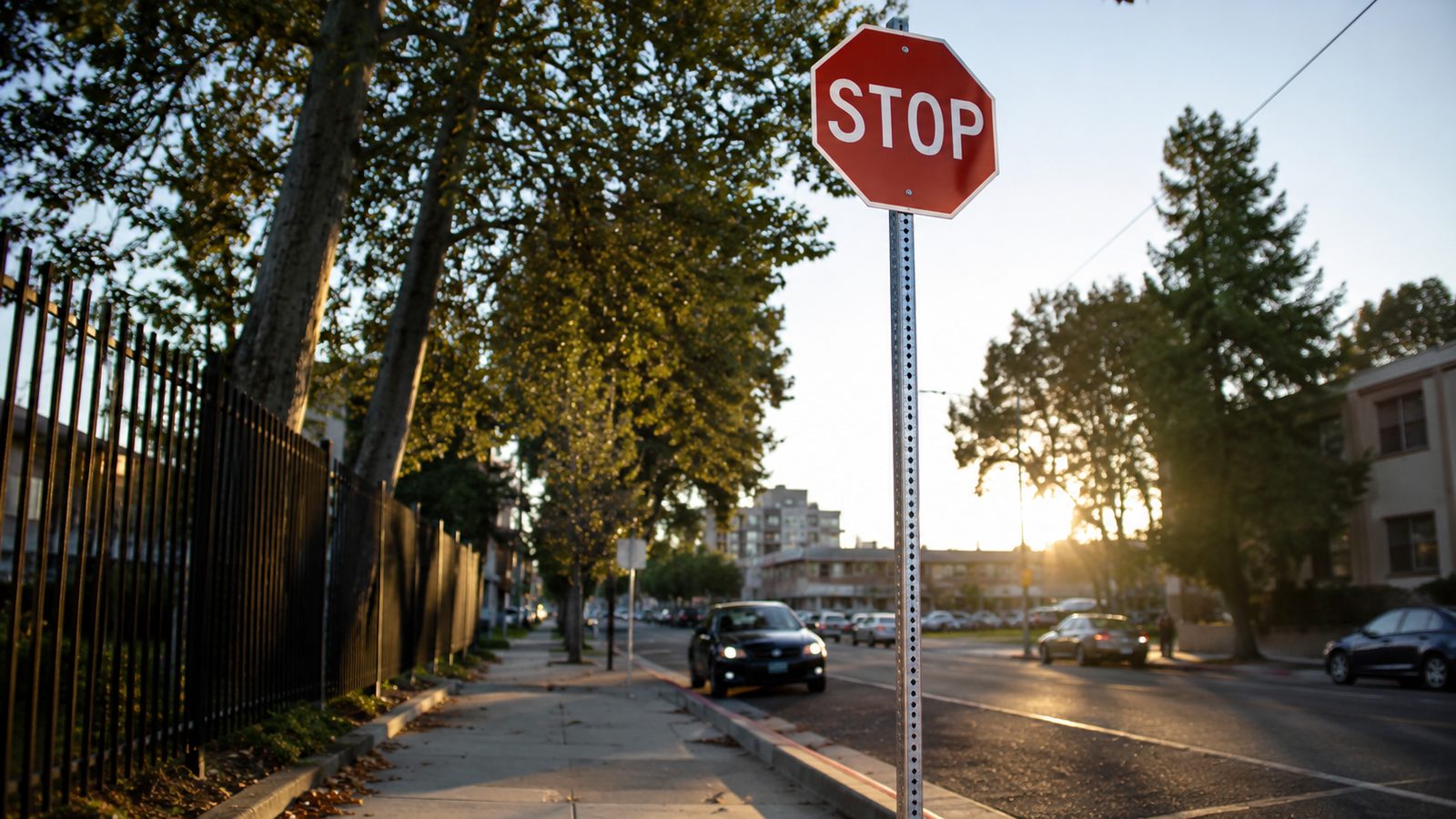
When a vehicle strikes a sign post and the incident ends in injury or litigation, the mangled metal becomes a piece of evidence. Forensic traffic engineers systematically analyze every bend, fracture, and scratch to reconstruct the crash dynamics and determine compliance with safety standards.
The first task is damage pattern analysis. A post struck at low angle may show a gradual bend with paint transfer, while a perpendicular high-speed impact often results in a clean shear failure. Fracture surfaces are first examined macroscopically, then analyzed at higher magnification. A ductile fracture, with visible necking and microvoid coalescence under microscopy, indicates the material absorbed significant energy before failing. A brittle fracture, with cleavage facets, may point to a material defect, improper welding, or low-temperature embrittlement.
If the post is a breakaway design—engineered to yield at the base—the investigator measures the stub height. Standards such as AASHTO’s Manual for Assessing Safety Hardware (MASH) specify that a breakaway mechanism should activate when a specific energy threshold is exceeded. If the stub remains too tall or shows severe twisting, the foundation may have been noncompliant or the soil stiffened by frost. Conversely, if the post separated too easily, it might have been improperly torqued or previously damaged.
Anchorage is another focus. Missing, undersized, or corroded anchor bolts reveal a maintenance failure that converted a forgiving structure into a rigid spear. The morphology of corrosion products is analyzed to determine whether degradation occurred before or after the crash. Chemical analysis of the bolt steel can identify if the wrong grade was used.
The sign panel itself yields clues. The direction of retroreflective scratching indicates the relative motion of the vehicle. Tire marks and gouges in the surrounding ground are mapped using total stations or 3D scanners to calculate speed and trajectory via energy methods. All data are compared against the vehicle’s Event Data Recorder, if available.
En fin de compte, un poteau de signalisation brisé parle. Les ingénieurs forensiques traduisent son témoignage silencieux en calculs d'angle d'impact, de vitesse et de conformité. Leurs conclusions mènent souvent à des conceptions de poteaux améliorées, à des spécifications d'installation plus rigoureuses et à la révision des normes mêmes qui définissent comment un poteau de signalisation doit se rompre— – ou, plus important encore, comment il doit sauver une vie en cédant avec grâce.
Une communication avec nos clients venue du cœur : nous pouvons faire mieux ! E-mail : jinshi@wiremeshsupplier.com
Hebei jinshi industrial metal co., ltd