
Winter's Hidden Assault: How Road Salt Attacks Steel Infrastructure
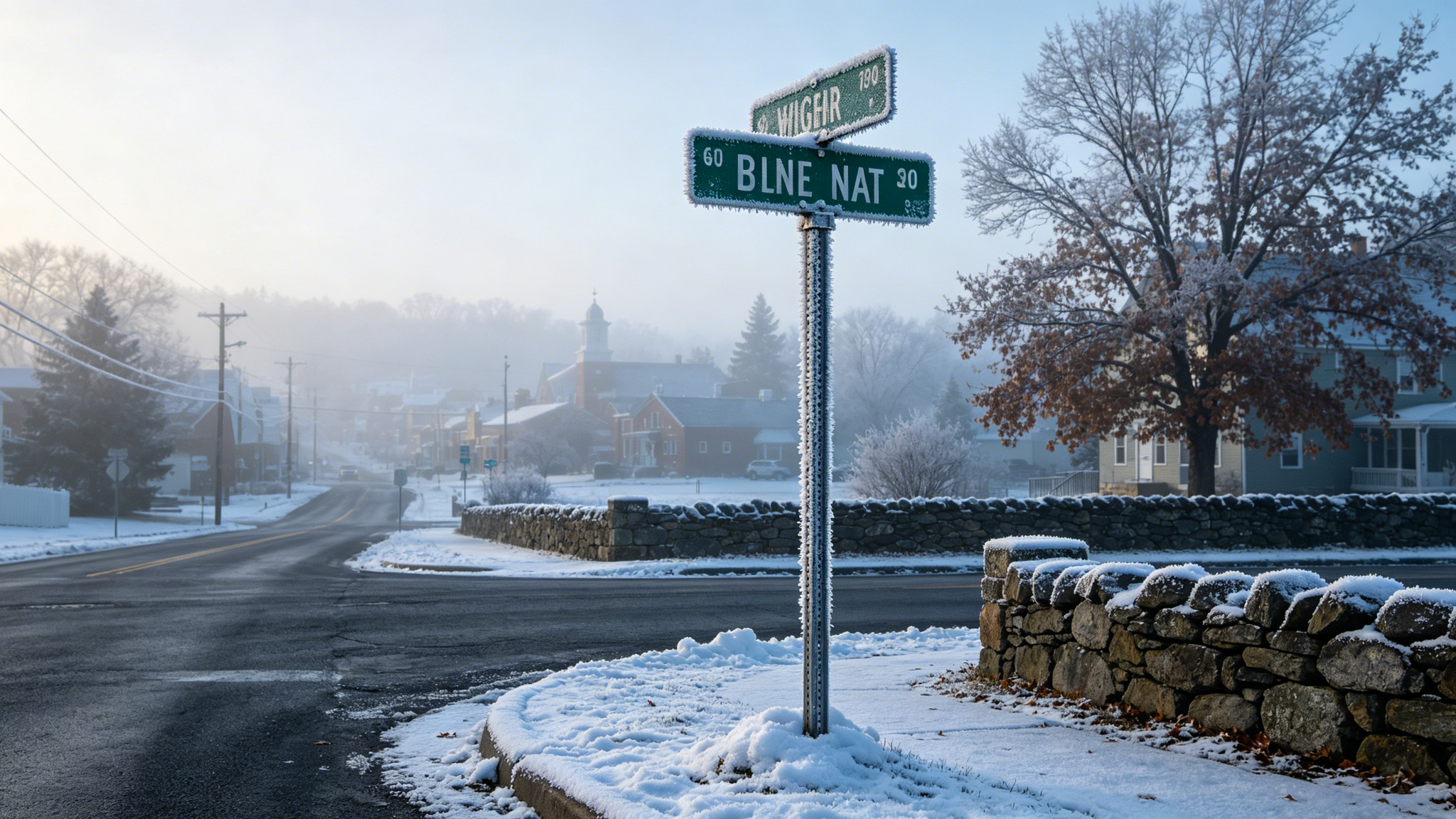
Every winter, transportation departments spread millions of tons of salt across roads to melt ice and improve traction. The practice saves lives on slippery roads, but it quietly wages a chemical war against the steel infrastructure standing alongside those same roads, including sign posts.
The corrosive threat comes primarily from chloride ions, the component of common rock salt, sodium chloride, that makes it so effective at lowering the freezing point of water. When vehicles drive through slush and salt residue, their tires fling a fine mist of saltwater and dry salt particles into the air. This spray does not stay confined to the road surface; studies tracking deicing salt have found airborne particles settling on structures hundreds of feet from the roadway, and in some dense urban settings, residue has even been detected many stories up the sides of nearby buildings.
Once chloride ions reach a steel or galvanized surface, they accelerate corrosion by disrupting the protective layers that would otherwise slow oxidation. On bare or painted steel, chlorides penetrate small breaks in the coating and promote localized rust formation beneath the surface, often invisible until the coating has already been undermined. On galvanized steel, the zinc coating is more resistant, but repeated wetting and drying cycles combined with high chloride concentration can still gradually consume the sacrificial zinc layer faster than in a chloride-free environment, shortening its effective service life in heavily salted regions compared with the same coating in a milder climate.
The economic scale of this damage is substantial. Research into deicing chemicals has estimated that the corrosion-related costs of road salt use, spread across highway infrastructure, bridges, and vehicles, run into the billions of dollars annually in the United States alone, a figure that reflects not just sign posts but guardrails, bridge reinforcement, and countless other steel components exposed to the same airborne chloride.
Sign post design responds to this reality in a few practical ways. Hot-dip galvanizing to a thicker specified coating weight is often used in regions with heavy winter salt application, since a thicker sacrificial zinc layer simply takes longer to be consumed. Some agencies also favor powder-coated or duplex-coated posts, combining a zinc base layer with a polymer topcoat, in the most severely exposed locations, such as immediately alongside heavily salted expressways.
The next time a sign post along a snowy highway shows a faint chalky residue in early spring, that is often the visible aftermath of a genuinely chemical process: chloride ions reacting with a zinc coating engineered specifically to sacrifice itself, season after season, so the steel underneath keeps standing.
Communication With Customers From the Heart, We Can Do Better! e-mail: jinshi@wiremeshsupplier.com
Hebei jinshi industrial metal co., ltd